

November in the Czech Republic has its own atmosphere. The golden leaves are disappearing, the evenings are getting colder, and the first hints of winter are in the air. Then something delicious starts appearing on restaurant menus: roast goose, accompanied by dumplings, red cabbage and a glass of young wine.
It is time for St Martin’s Day (Svatý Martin), celebrated on November, 11. This traditional Czech feast brings together history, folklore and seasonal food — and offers a lovely opportunity for expats to discover another part of their adopted home.
Who was St Martin?
St Martin of Tours was a real historical figure who lived in the fourth century. Born in the region of present-day Hungary, he served in the Roman army before becoming a Christian and eventually a bishop in what is now France.
His best-known story comes from legend. On a cold day, Martin encountered a freezing beggar and cut his cloak in half to share it with him. According to the story, he later dreamt of Jesus wearing the piece of clothing he had given away.

It is a simple tale about kindness and generosity — a fitting message as the colder months approach.
Over the centuries, St Martin’s feast day also became an important date in the agricultural calendar. Seasonal work was coming to an end, wages were paid and employment agreements were renewed. It was a natural moment to celebrate the year’s work and prepare for winter.
Will Martin bring the first snow?
You may hear the Czech saying “Martin přijíždí na bílém koni”, which translates as “Martin arrives on a white horse”.
The white horse represents the first snowfall of the season. Whether Martin actually delivers snow is another matter — November weather can be rather unpredictable!
The saying reflects a time when people paid close attention to the changing seasons. Today, the image remains a charming part of Czech folklore, and some communities celebrate with St Martin arriving on horseback, lantern processions or family-friendly events.
Goose, pastries and the first wine of the year
For many people, the best part of St Martin’s Day is the food.
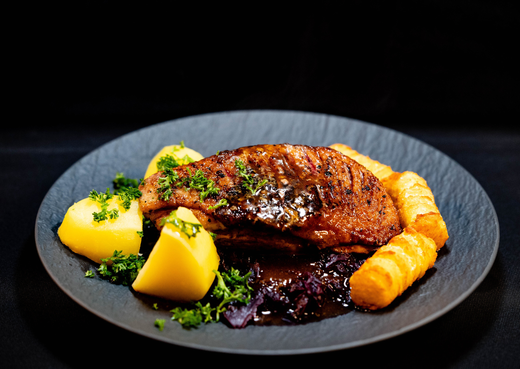
Roast goose (svatomartinská husa) is the undisputed star. Traditionally served with red cabbage and Czech dumplings (knedlíky), it is a generous, warming meal made for a chilly November day. Restaurants often offer special St Martin’s menus, sometimes including goose soup and other seasonal dishes.
If you prefer something sweet, look for svatomartinské rohlíčky — small crescent-shaped pastries filled with poppy seeds, walnuts or other sweet fillings. They are perfect with an afternoon coffee.
And then there is St Martin’s wine (svatomartinské víno).
This young wine, made from the year’s harvest, is fresh, fruity and intended to be enjoyed early rather than stored for years. The Czech Wine Fund introduced the modern St Martin’s wine designation in 2005, with specific requirements for the wines that carry it.
Traditionally, the first bottles are opened on 11 November at 11:11 a.m. The moment has become a popular excuse to gather with friends, taste the new vintage and toast the season.
Goose and young wine? It is not a bad way to welcome November.
How is St Martin’s Day celebrated today?
The tradition has evolved, but its central appeal remains the same: good food, good company and a reason to celebrate the season.
Across Czechia, restaurants prepare special menus, wineries host tastings, and towns organise markets, processions and lantern walks. In some places, St Martin even arrives on horseback, bringing his symbolic promise of the first snow.
Not every Czech family celebrates the day in the same way. For some, it is an annual tradition; for others, it is simply a good excuse to enjoy roast goose or try the latest young wine. Either way, it remains a welcome opportunity to gather as the days grow shorter.
Discovering the tradition in Plzeň
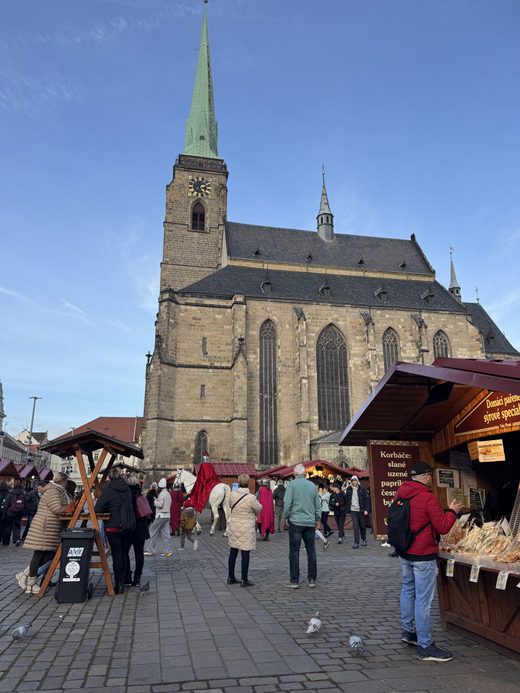
In Plzeň, St Martin’s Day can be a lovely opportunity to experience Czech traditions first-hand. Seasonal markets, where they are held, bring a festive atmosphere to the city, and visitors may even catch a glimpse of St Martin arriving on his white horse.
Local restaurants often mark the occasion with roast goose, while wine shops offer svatomartinské víno, the young Czech wine traditionally associated with 11 November.
It is a simple and enjoyable way to discover a local tradition — whether you are joining a celebration, sharing a meal with friends or simply raising a glass to the changing season.
A new tradition to call your own
You do not need to have grown up in Czechia to enjoy St Martin’s Day. Try a traditional pastry, taste a glass of young Czech wine or share a roast goose dinner with friends.
Traditions like this are about more than history. They create little moments of connection — through food, stories and the pleasure of gathering as the days grow shorter.
And who knows? If Martin arrives on his white horse this year, you may find yourself looking forward to the first snow just like the locals.
Sometimes, feeling at home begins with something as simple as sharing a good meal.
Picture source: Canva
Information source: Visit Czechia Vinařský fond National Gallery in London
