As temperatures drop across Central Europe, you might find yourself touching your apartment’s radiators and wondering: why are they still lukewarm when it feels freezing outside?
Before you assume your heating system is broken or crank the dial all the way up, there are a few local rules you need to know. Heating in the Czech Republic is governed by national decrees, clever building engineering, and strict billing formulas. Understanding how it works will not only keep your flat comfortable; it will save you thousands of crowns when your annual utility statement arrives.
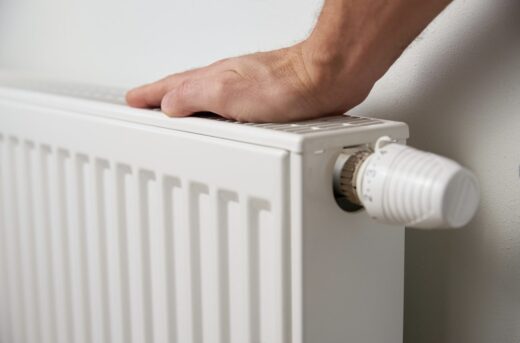
Did You Know? The Czech 13°C Rule
If your building relies on district heating (dálkové vytápění), as most Czech apartment blocks and panel buildings (paneláky) do, your landlord or building committee does not simply decide when to turn on the boiler.
By official decree from the Czech Ministry of Industry and Trade, the heating season formally runs from September 1 to May 31. However, suppliers only begin pumping hot water through the central network when specific weather criteria are met:
- The outdoor average temperature drops below +13°C for two consecutive days.
- Weather forecasts do not expect temperatures to rise above +13°C on the following day.
Until both conditions are satisfied, central heating remains idle. The same rule applies in reverse during spring: once average temperatures rise above +13°C for two consecutive days, the system automatically shuts off.
Decoding Your Radiator Dial (Numbers 1 to 5)
One of the biggest misconceptions among newcomers is thinking that turning a radiator valve to 5 heats up a cold room faster.
In reality, the numbers on a thermostatic radiator valve (termostatická hlavice) represent target room temperatures, not heating speed. The radiator pumps hot water at the exact same rate until the room reaches the temperature set on the dial, then it automatically shuts off.
Here is what each setting actually means:
- (Snowflake symbol): Frost protection (~6–8°C). Use this only when going away on an extended winter trip.
- Setting 1: ~12–14°C — Best for hallways, storage spaces, or rarely used rooms.
- Setting 2: ~16–18°C — Ideal for bedrooms at night for healthier, deeper sleep.
- Setting 3: ~20–21°C — The golden standard for living rooms and home offices during the day.
- Setting 4: ~22–24°C — Comfortable warmth for bathrooms.
- Setting 5: ~26°C+ — Maximum continuous heat. Leaving your radiators on 5 all winter forces the system to run nonstop and dramatically inflates your annual bill.
The Art of Větrání (Why Leaving Windows Tilted Costs You Money)
Czech windows are famous for their tilt-and-turn (oscillation) mechanism. While tilting the top open works great in spring and summer, leaving a window tilted all day in winter is a costly mistake.
A continuously tilted window cools the surrounding masonry wall, dissipates heat, and causes condensation, which quickly leads to mold (plíseň) around the window frames.
Instead, follow the local habit of shock ventilation (nárazové větrání):
- Turn your radiator valves down to 0 or (snowflake symbol).
- Open your windows wide open for 4 to 6 minutes to create a quick cross-breeze.
- Close the windows firmly and turn your radiators back to 3.
Because dry, fresh air heats up much faster than stale, humid air, and your walls stay warm, you refresh your entire apartment without losing stored heat.
Quick Winter Checklist for Czech Flats
- Don’t block the heat: Keep thick floor-length curtains, sofas, and drying racks away from radiators so warm air can circulate freely into the room.
- Bleed noisy radiators (Odvzdušnění): If your radiator makes gurgling water sounds or stays cold at the top while warm at the bottom, trapped air is blocking circulation. Let your landlord or property manager know so it can be bled quickly.
- Close interior doors: If you keep your bedroom cooler (Level 2) than your living room (Level 3), keep the door closed between them so your living room radiator doesn’t work overtime trying to heat both spaces.
Source: Faktpocasi
Picture source: Canva