If you live or study in Brno, you may have walked past one of the most important places in the history of science without knowing it. In the quiet district of Old Brno, a monk once grew peas in an abbey garden and discovered how traits are passed from parents to children. Today we call him the “father of genetics”.
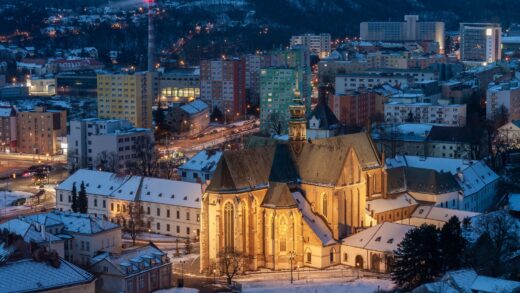
Who Was Gregor Mendel?
Johann Mendel was born on 20 July 1822 in Heinzendorf, then part of Austrian Silesia and today the village of Hynčice in Czechia. He grew up in a farming family, and in 1843 he joined the Augustinian Abbey of St. Thomas in Brno, where he took the name Gregor. For a young man from the countryside, the abbey meant access to education and research. His abbot sent him to study in Vienna, and when he returned, he taught natural science in Brno.
The Pea Experiments
Between 1856 and 1863, Mendel grew and tested around 28,000 to 29,000 pea plants in the abbey garden. Peas were a smart choice: they are easy to grow, they come in clear opposite forms (round or wrinkled seeds, purple or white flowers), and a scientist can control which plants are crossed.
He studied seven traits and carefully counted the results. In the second generation, about three plants out of four showed one form and one out of four showed the “hidden” one. This 3:1 pattern appeared again and again. From it, Mendel concluded that each plant carries two “factors” for every trait, one from each parent, an idea that became the foundation of genetics.
In February and March 1865, he presented his results to the Natural History Society of Brno, and his paper was published in 1866. At the time, it had little impact. Other scientists did not understand how important it was.
After the Experiments
In 1868, Mendel was elected abbot, and his new duties left little time for research. He kept up other interests, such as weather observation and beekeeping, and in 1871 an apiary was built in the abbey garden. He died on 6 January 1884 and was buried in Brno’s Central Cemetery. (If you read our post about Dušičky, this is the same cemetery.)
Sixteen years later, in 1900, three scientists independently reached similar results and found his old paper. Only then did the world recognise his work.
Visit Mendel’s Brno
The Mendel Museum of Masaryk University is in the grounds of the Augustinian Abbey in Old Brno, where Mendel lived and worked. The exhibition follows his life from childhood to his years as abbot, and the tour ends with a manuscript handwritten by Mendel. You can also see his microscope and original beehives, and walk through the garden where the foundations of his greenhouse still lie.
Practical information (2026)
- Address: Mendlovo náměstí 1a, Old Brno (tram stop Mendlovo náměstí)
- Opening hours: April to September, Tuesday to Sunday, 9:00-18:00. October to March, Tuesday to Sunday, 10:00-17:00. Closed on Mondays.
- Tickets: CZK 130 for adults, CZK 100 discounted (students, ISIC holders, children aged 6-18, seniors). Prices valid from 1 July 2026.
- Free entry on the last Wednesday of each month (individual visits only).
- Guided tours in English must be booked at least 4 days in advance.
Prices and hours can change, so check the museum’s website before you go.
Have you visited the Mendel Museum? Is there a scientist from your home country you’re proud of? Tell us in the comments!
Resources: Mendel Museum of Masaryk University GoToBrno (official Brno tourism), Memorial University of Newfoundland, Medical Economics, Mendel
Photo: Canva