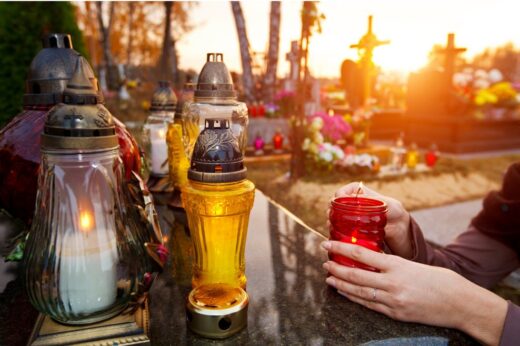
Early November in Czechia is not about costumes or candy. Families walk to the cemetery with flowers and candles, and the graves glow softly in the dark. This is Dušičky, the time when Czechs remember those who have passed away.
For foreigners living in Czechia, it can be surprising at first. The mood is calm and warm rather than scary, and it is a beautiful way to understand something deep about Czech culture.
What Is Dušičky?
The word comes from the Czech duše, meaning “soul”, and the official names include “Památka zesnulých” and “Vzpomínka na všechny věrné zesnulé” (Remembrance of All the Faithful Deceased). It is celebrated on 2 November, right after All Saints’ Day on 1 November.
Dušičky is not a public holiday. Czech law lists the state and other holidays, and 1 and 2 November are not among them, so shops and offices stay open. Most people visit the cemetery on the weekend or in the evening around the date.
A Short History
The Christian roots go back to the early Middle Ages. Odilo, abbot of the French monastery of Cluny, established All Souls’ Day on 2 November in Cluny and its monasteries, and it was soon adopted by the whole Church.
Czech Traditions
Families go to the cemetery to clean and decorate the graves of loved ones, and many leave candles and flowers. The atmosphere is anything but gloomy. Some typical elements:
- Candles as a symbol of remembrance.
- Flowers and autumn wreaths. The late Cardinal Miloslav Vlk said living flowers represent belief in eternal life and candles symbolize resurrection.
- Family time. Several generations often visit together.
- Visiting famous graves. Many people also pay tribute to well-known Czechs.
Some old customs have almost disappeared. Bohemians once filled lanterns with butter, drank cold milk to ease the pain of departed souls, and in South Bohemia baked bone-shaped pastries and sang from door to door.
Dušičky matters even in a country where few people are religious. Cardinal Vlk once called it the second largest religious holiday in Czechia after Christmas, observed by both believers and non-believers. This fits the census: fewer than 1.4 million people said they belong to a church or religious society in 2021, in a country of about 10.5 million.
How to Experience Dušičky in Brno
- Visit a cemetery in the evening. The candlelight is most beautiful after dark. Brno has more than ten cemeteries with around 100,000 grave places, and the Central Cemetery (Ústřední hřbitov) is the largest.
- Check opening hours. Brno cemeteries usually extend their hours around Dušičky, but not every cemetery has the same hours, so check the city cemetery administration before you go.
- Bring a candle or flowers. Both are sold at supermarkets and florists near the cemeteries.
- Be respectful. Keep your voice low, and ask before photographing people. Avoid costumes.
- Talk to your Czech neighbors. Many have a family story about this day.
Curious about other Czech traditions and holidays? Read more about how Czechs celebrate Easter in the Czech Republic.
What do you do to remember loved ones in your country? Tell us in the comments!
Resources
Photo: Canva
Tags: czech culture, Czech traditions, Dušičky, All Souls’ Day